When to Prune Trees and Shrubs in Vancouver: A Seasonal Guide
Pruning at the right time can improve plant health, preserve natural shape, and keep a garden feeling open and refined. Pruning at the wrong time can remove flower buds, encourage unwanted growth, or leave plants vulnerable to stress.
Vancouver's mild, wet climate creates a long growing season, but there is no single pruning month that suits every plant. The best timing depends on the species, its flowering cycle, its condition, and what you want the pruning to achieve.
Why Pruning Timing Matters in Vancouver
Vancouver's coastal climate is relatively mild, but frequent moisture can affect fresh pruning cuts and plant health. Timing also determines how a plant responds. Dormant pruning may encourage vigorous spring growth, while careful summer pruning can help control size.
The Province of British Columbia notes that many trees are generally pruned during dormancy, while dead or diseased branches can be removed when needed. The correct approach still depends on the individual plant.
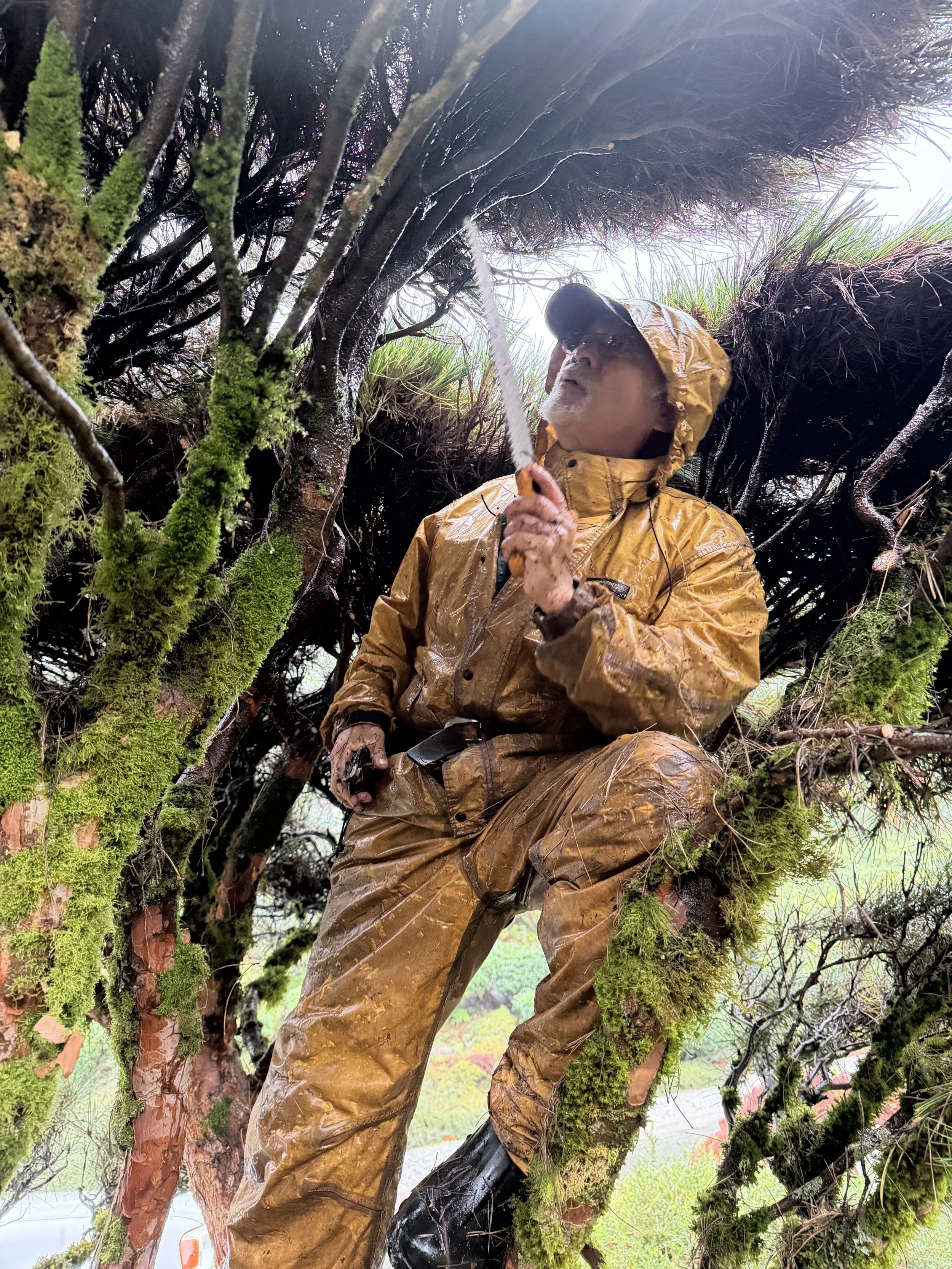
If you are unsure what is growing in your garden, begin with identification. A professional tree pruning service in Vancouver can assess the plant before deciding where and when to cut.
Vancouver Pruning Calendar
| Season | Suitable Tasks | Watch For |
|---|---|---|
| Late Winter | Structural pruning for many dormant deciduous trees and shrubs. | Avoid excessive pruning and confirm the plant's flowering cycle. |
| Spring | Remove winter damage and prune spring-flowering shrubs after blooming. | Do not remove developing flowers or fresh growth unnecessarily. |
| Summer | Light shaping, thinning, hedge refinement, and controlling vigorous growth. | Heavy pruning can stress plants during hot or dry periods. |
| Autumn | Remove clearly dead or hazardous material and plan winter work. | Fresh cuts may remain exposed during prolonged wet weather. |
Pruning timing varies by species, age, health, and the result you want to achieve.
When to Prune Flowering Shrubs
The key question is whether the shrub flowers on old wood or new growth.
Spring-flowering shrubs often form their flower buds during the previous growing season. Pruning them before flowering may remove those buds. In many cases, the better time is shortly after the flowers fade.
Shrubs that flower later on new growth may be suited to late-winter or early-spring pruning. Because varieties differ, identification should come before cutting.
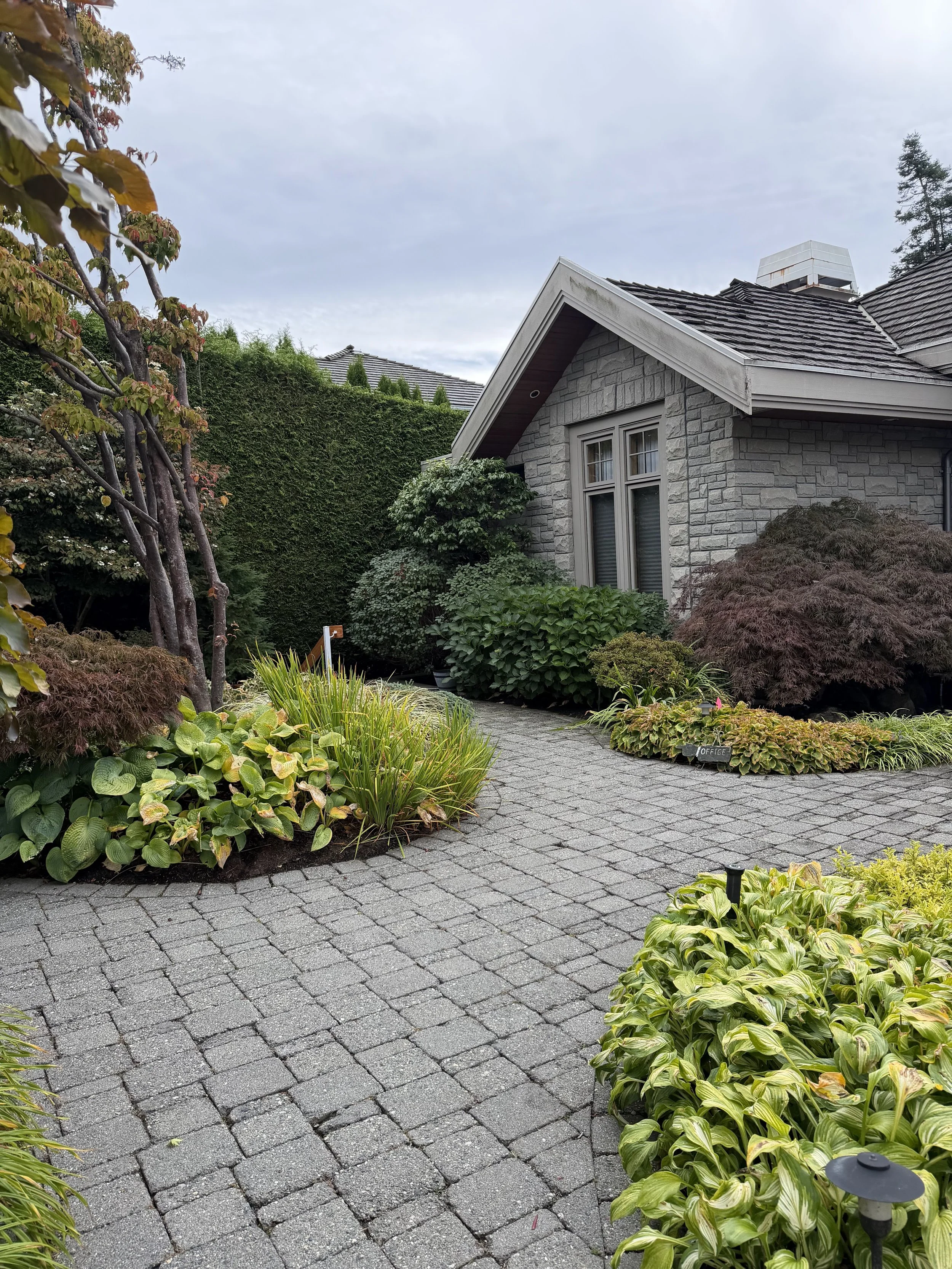
For gardens with layered hedges and ornamental planting, Okada Earthscape's landscape maintenance service can incorporate shrub care into a broader seasonal plan.
When to Prune Japanese Maples
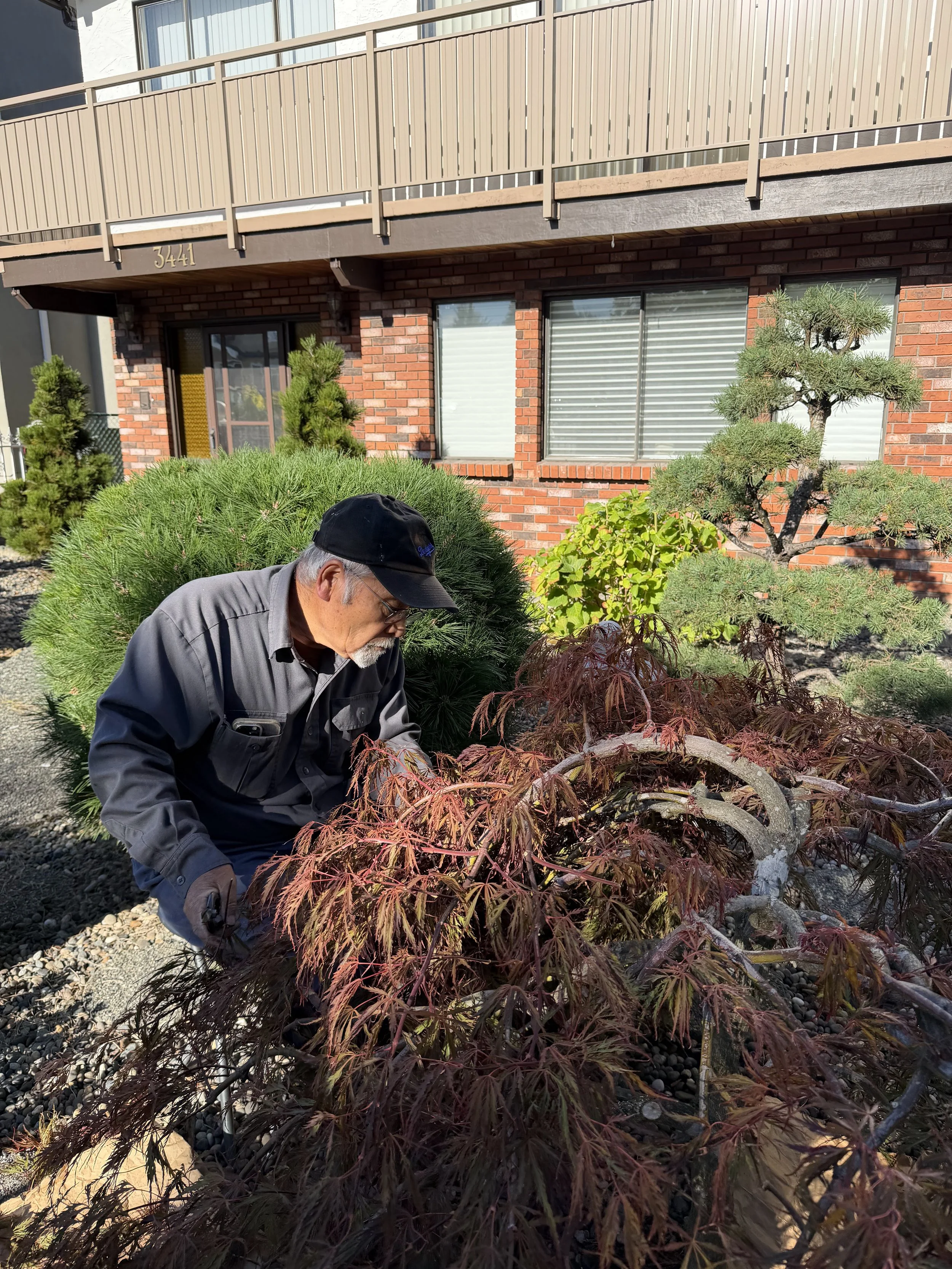
Japanese maples are valued for their branching structure, movement, and seasonal colour. Aggressive shaping can quickly damage their natural character.
Pruning should focus on:
Dead, damaged, or crossing branches
Congested interior growth
Branches that disrupt the intended form
Growth affecting paths, structures, or important views
Selective cuts are usually better than shearing. The goal is to reveal the tree's structure without making it look overworked.
When to Trim Hedges and Evergreen Shrubs
Hedges may need light trimming during active growth, but frequency depends on species and the desired finish. Formal hedges generally need more visits than naturalistic screens.
Avoid cutting deeply into old, bare wood unless the species is known to regenerate from it. Some conifers will not reliably produce new growth from heavily cut interior branches.
Bonsai and Japanese Garden Pruning
Bonsai pruning is not simply about keeping a tree small. It maintains proportion, branch structure, balance, and the relationship between the tree and its setting.
Japanese garden pruning may also involve thinning rather than shearing. Removing selected growth allows light to pass through the canopy and preserves a more natural silhouette.
When Should You Call a Professional?
Professional help is valuable when:
You cannot identify the tree or shrub
The plant has sentimental or financial value
The garden includes mature Japanese maples, bonsai, or sculptural trees
Previous pruning has created dense or weak regrowth
Branches are close to buildings, paths, or neighbouring properties
The work requires ladders, specialist equipment, or safety planning
Large trees, hazardous limbs, utility conflicts, and removal work may require a certified arborist or specialist tree service. The City of Vancouver also regulates certain work involving protected trees and public trees.
Plan Pruning Around the Garden, Not Just the Calendar
The best pruning schedule considers the whole landscape. Trees, shrubs, hedges, paths, stone, water, and views should work together.
Okada Earthscape provides careful pruning for ornamental trees, shrubs, bonsai, hedges, and Japanese-inspired gardens across Greater Vancouver. Explore our tree pruning services or request a consultation.
Create a Beautiful Garden With Less Upkeep
Work with Okada Earthscape to design a calm, refined outdoor space suited to your property and lifestyle.