Japanese Garden Design Ideas for Timeless Outdoor Serenity
Japanese gardens are cherished around the world for their timeless elegance and ability to cultivate calmness in an increasingly busy world. With origins dating back over a thousand years, these landscapes draw inspiration from Shinto, Buddhist, and Taoist philosophies, emphasizing harmony between humans and nature. Rather than relying on bright floral displays or rigid formality, Japanese garden design relies on subtlety—carefully chosen plants, thoughtful placement of rocks, and water features that evoke a sense of balance and flow.
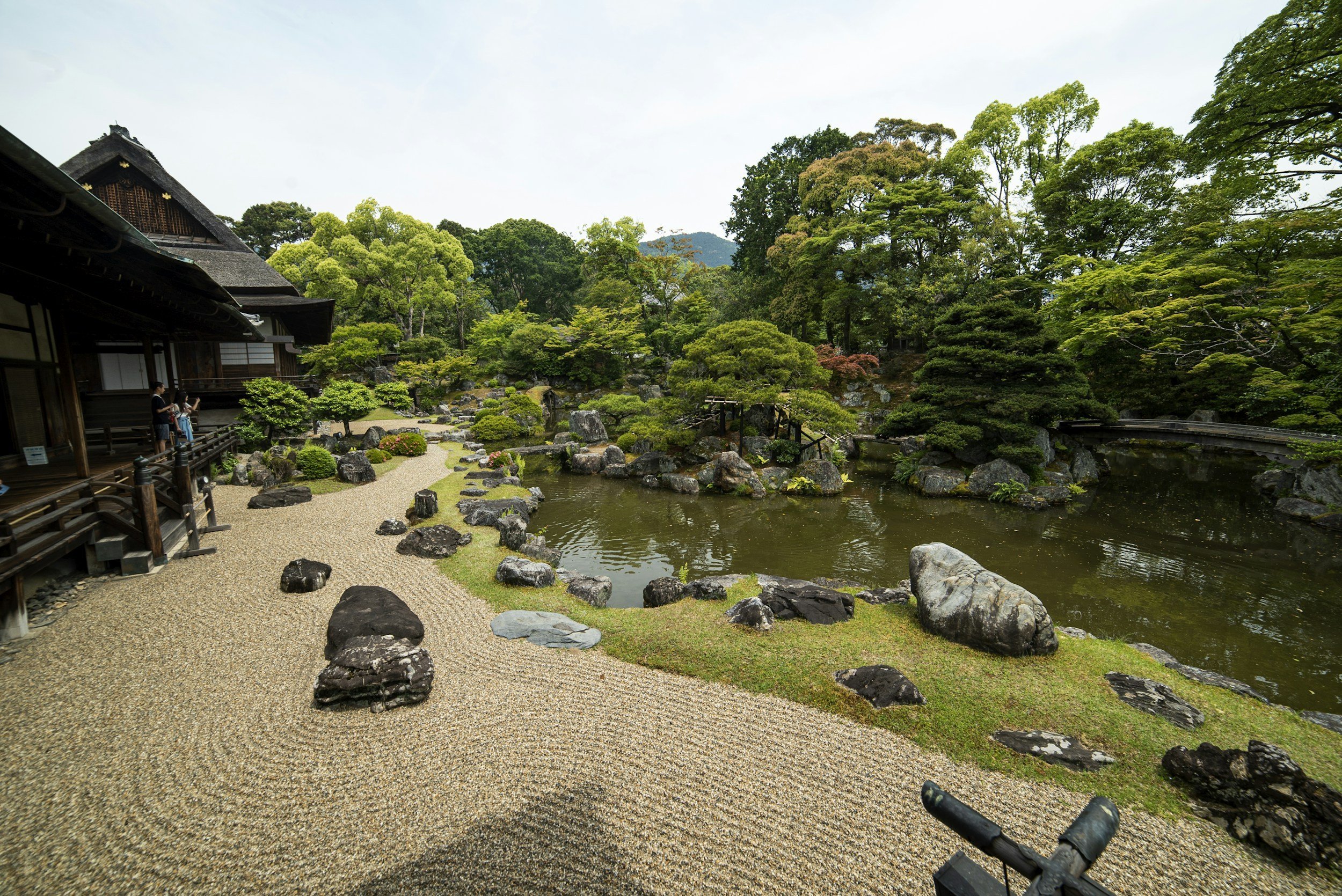
Whether you’re designing a quiet corner for meditation, a backyard retreat, or a larger landscape inspired by traditional Japanese gardens, the principles remain the same: simplicity, symbolism, and a deep respect for natural forms. Below are key Japanese garden design ideas you can draw upon to create a space that radiates serenity year-round.
1. Stone Paths and Stepping Stones
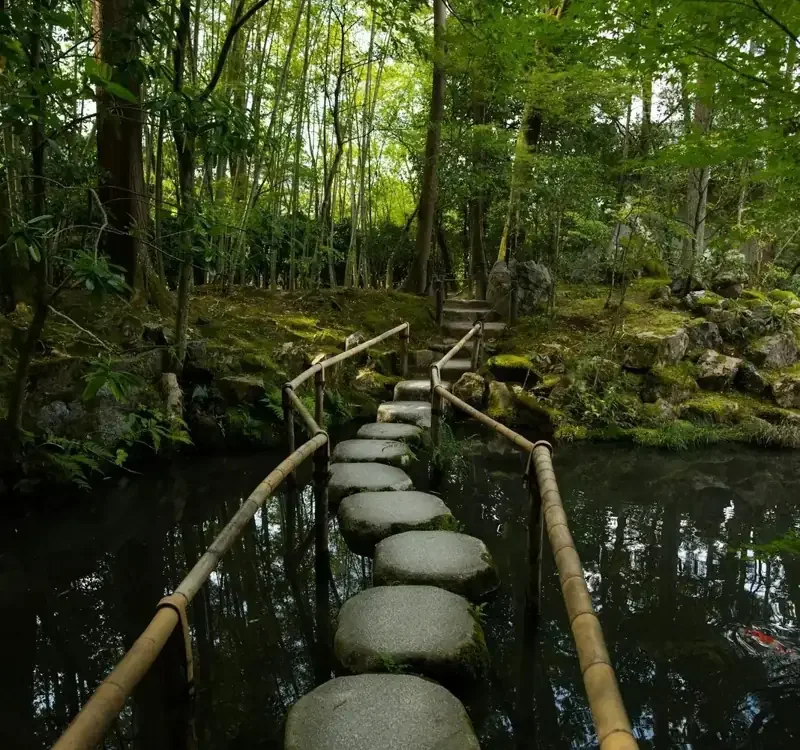
Pathways are more than functional walkways—they embody the journey of life and invite mindfulness. Unlike straight, rigid paths, Japanese gardens favor meandering routes that slow the pace and encourage observation of details, from the texture of moss to the sound of rustling bamboo.
Stepping stones, irregular flagstone, or finely crushed gravel are often used to create these paths. The asymmetry of placement mimics nature and avoids a man-made feel. Bordering paths with low moss, ferns, or creeping groundcovers softens the edges and adds texture. In larger gardens, stone bridges over streams or ponds serve as elegant transitions between spaces, blending practicality with beauty.
2. Koi Ponds and Water Features
Water is a central element in Japanese gardens, symbolizing renewal, adaptability, and the ever-changing flow of life. The most iconic example is the koi pond, where colorful fish add movement, energy, and a touch of vibrancy to an otherwise tranquil setting.
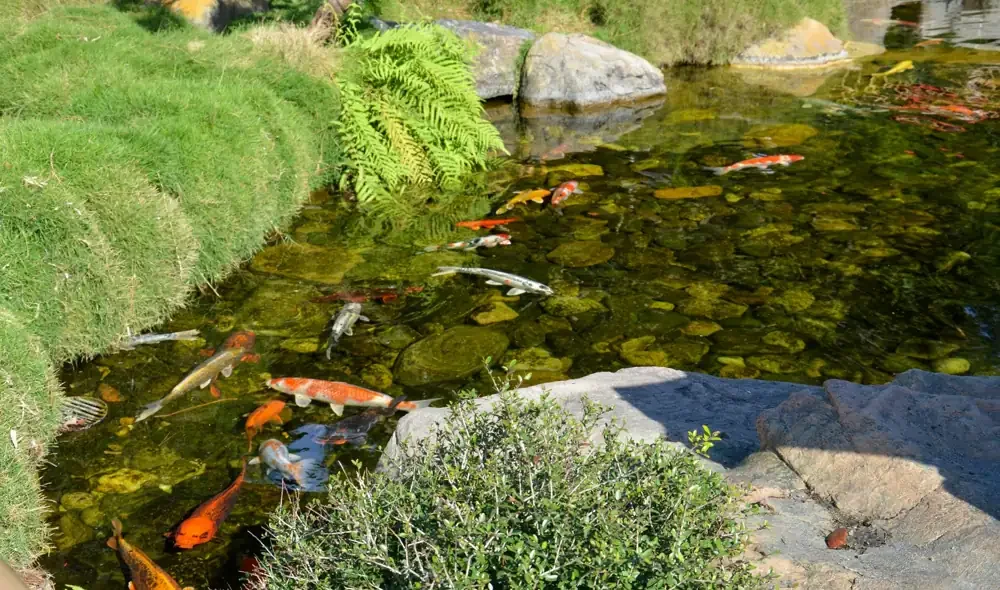
But even if a koi pond isn’t feasible, smaller water features like bamboo fountains (shishi-odoshi), still-water basins (tsukubai), or gently trickling streams bring sound and reflection into the garden. The choice depends on the scale of your space: a courtyard might be best suited for a stone basin, while a larger yard could accommodate a stream bordered by mossy rocks. The soothing presence of water naturally draws visitors into a meditative state, reinforcing the restorative power of the garden.
3. The Subtle Art of Plant Placement
Unlike Western gardens that often highlight bright blooms and dense plantings, Japanese garden design emphasizes restraint and deliberate placement. Plants are chosen for their symbolism, texture, and seasonal interest rather than for sheer abundance.
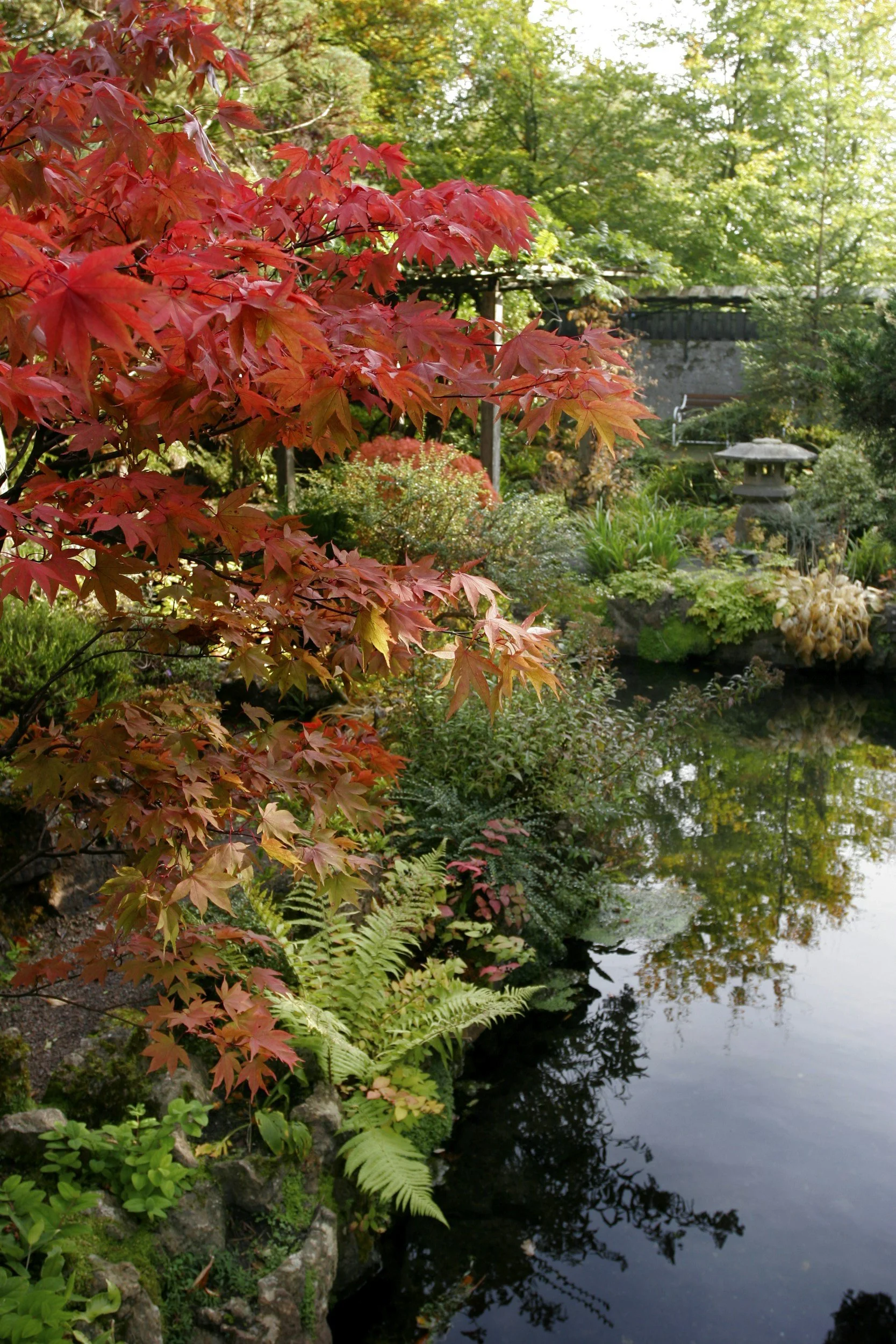
Evergreens such as pine, cedar, and camellia are valued for their year-round presence, symbolizing endurance and stability. Japanese maples bring brilliant seasonal change—flaming red in autumn, delicate greens in spring. Bamboo offers vertical elegance, while azaleas and rhododendrons provide bursts of color in spring. Moss, perhaps the most iconic plant in Japanese gardens, conveys age, permanence, and quiet beauty.
Equally important is how plants are arranged. Asymmetry is key: groupings mimic natural landscapes, with taller trees framing spaces and shrubs or groundcovers filling in around stones or water. This approach creates layered depth and a sense that the garden has evolved naturally over time.
4. Stones, Lanterns, and Symbolic Accents
Rocks and boulders are the backbone of Japanese garden design, representing mountains, islands, or permanence. Their placement is highly intentional, often arranged in odd-numbered groupings to create balance without symmetry. In dry gardens, rocks may represent islands in a sea of raked gravel, while in pond gardens they may mimic natural shorelines.
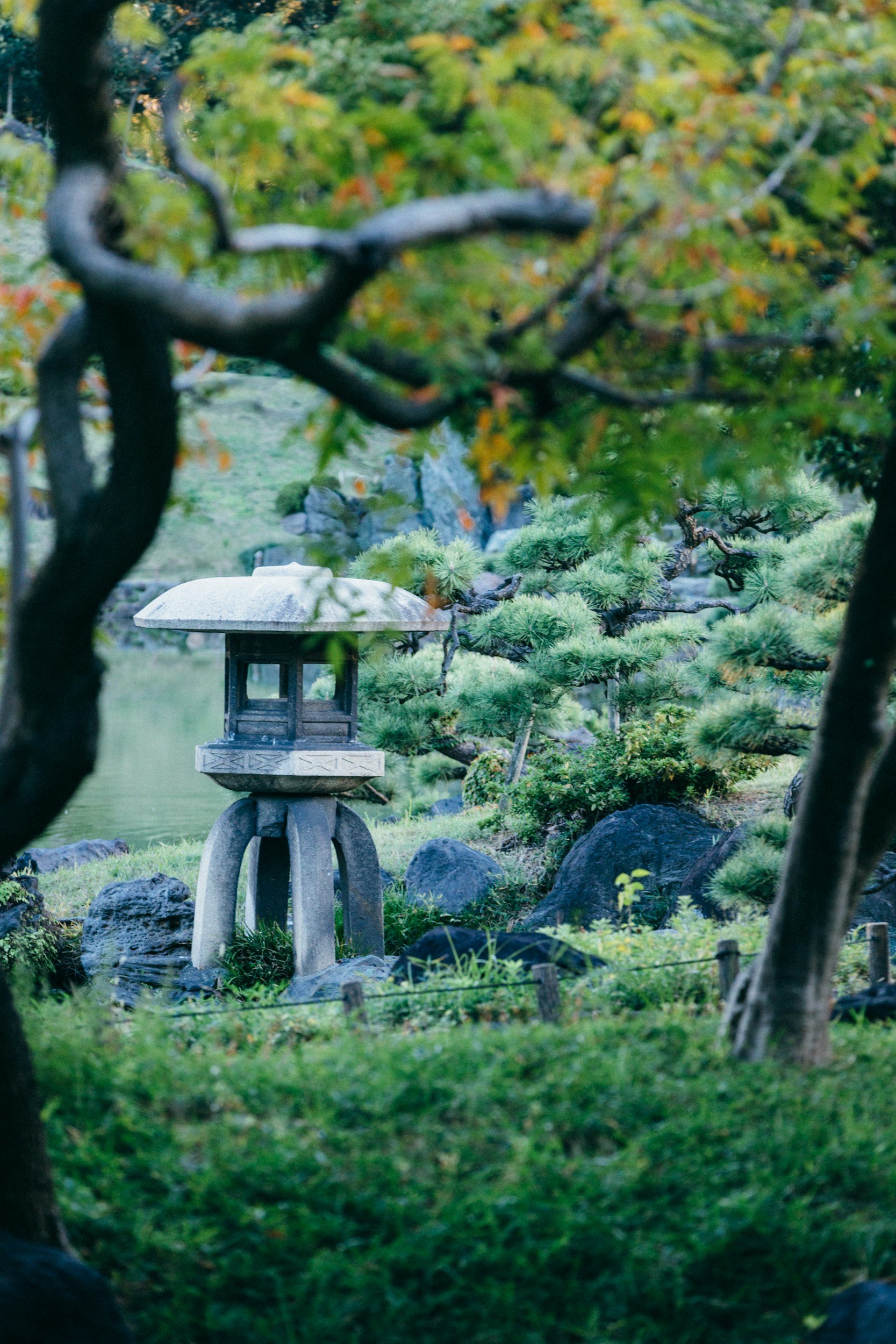
To complement the rocks, traditional lanterns (toro) carved from stone can be tucked into corners or placed near water features, symbolizing illumination and guidance. Water basins, often used in tea gardens for ritual cleansing, add authenticity and quiet charm. Bridges, whether stone or simple wooden arcs, act as both functional connectors and symbolic transitions between one state of being and another. These accents should be used sparingly to maintain the uncluttered simplicity that defines Japanese design.
5. Zen Gardens for Meditation
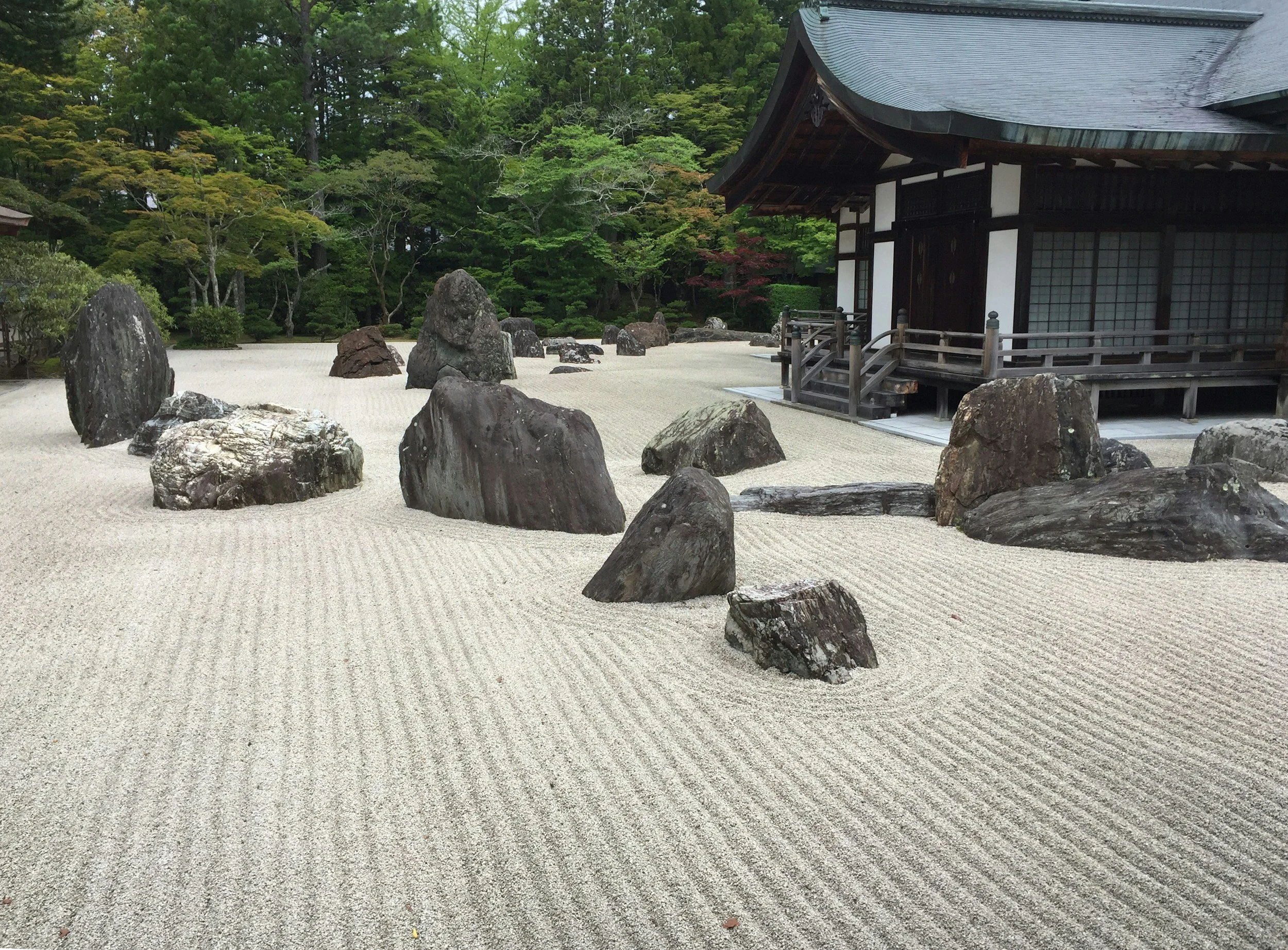
If space is limited—or if you wish to create a dedicated meditation area—a Zen-style garden (also called a karesansui or dry garden) is an ideal choice. These gardens use minimal materials to evoke profound symbolism. Carefully raked gravel or sand represents rippling water, while larger rocks symbolize mountains or islands.
Though deceptively simple, Zen gardens require precision and care. The act of raking itself can be meditative, reinforcing mindfulness and presence. Minimal planting is used, often limited to moss or a single carefully pruned tree. This simplicity creates an uncluttered environment that promotes inner stillness and reflection.
6. Borrowed Scenery (Shakkei)
A unique and often-overlooked concept in Japanese garden design is shakkei, or “borrowed scenery.” This involves incorporating views of the surrounding landscape into the garden itself, making the space feel larger and more connected to its environment. For example, a mountain in the distance, a line of tall trees, or even the roof of a traditional house can become part of the composition.
By carefully framing these external elements with plantings, fences, or architectural features, the garden feels expansive and integrated into the world beyond its boundaries. Even in urban settings, a glimpse of the sky or a neighboring tree can serve as borrowed scenery, reinforcing the garden’s connection to nature.
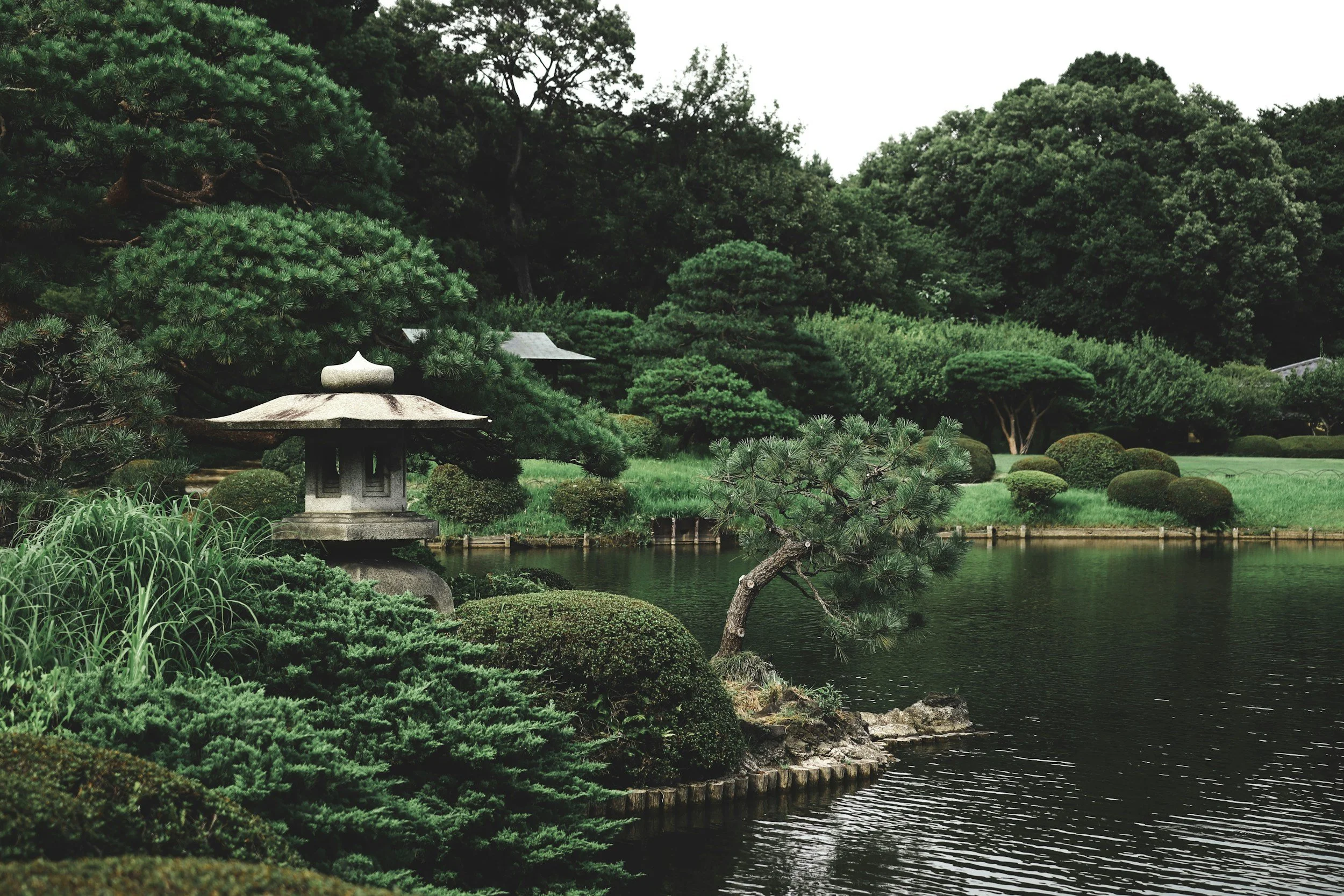
Japanese garden design is not simply about aesthetics—it is about creating spaces that encourage mindfulness, connection to nature, and an enduring sense of peace. Whether you’re drawn to the flowing beauty of a koi pond, the grounding presence of stone lanterns, or the meditative simplicity of a Zen garden, each design element carries meaning and intention.
By blending stone, water, plants, and symbolic accents with balance and restraint, you can transform any outdoor space into a sanctuary that feels both timeless and deeply personal. A Japanese garden is more than a landscape—it is a way of seeing and experiencing the world, inviting serenity into everyday life.
